Jay Powell opened the Jackson Hole Symposium this year discussing labor market and employment trends. Markets interpreted Powell’s remarks as leaning dovish, despite his neutral framing. Equities rallied (S&P +1.5%), Treasuries bull-steepened (2Y –9.5bp, 10Y –7.4bp), the dollar weakened (BBDXY –54bp), and gold gained (+99bp).
Going in, markets had already tempered their bullish take on July’s weak NFP print. Fed funds pricing eased from 5.06 to 4.99 cuts, and equities retraced 1.5% from recent highs. Hotter incremental data this week — firmer PMIs, higher inflation sentiment — framed Powell’s comments. During this week, incremental information came in a touch hotter, suggesting that the weakness in July's payrolls would see a partial give-back in August, while inflation sentiment rose with the U Mich survey last week and flash PMIs this week.
Data Points:
U Mich inflation expectations ticked higher (1Y: 4.5% → 4.9%; 5Y: 3.4% → 3.9%), underscoring concern over expectations unanchoring.
Flash PMIs showed business activity and hiring at a 3-year high, reinforcing the case that growth momentum is intact despite July payroll weakness.
Highlights from Powell's Speech:
Powell said that downside risks to the labor market were rising, with non-linear jump in unemployment possible.
On the inflation front, Powell reiterated that the Fed wouldn't allow a one-time price increase to drive inflation further. He acknowledged the risk with Core PCE at 2.9% and the impact of tariffs on prices.
Powell said that the policy stance is restrictive, now ~100bp closer to neutral, but that the balance of risks may justify adjustment.
Muhammad: Powell delivered a risk-balancing message. I don’t see this necessarily as a green light for an easing cycle, but it increases sensitivity to August payrolls. We may see the Fed cut in September while revising up its growth/inflation projections, underscoring a continued tension in policy.
Darren: To me, the most important point he made was that tariffs are unlikely to lead to a lasting wage-price spiral. That, combined with his comments on the weakening labor market seals the rate cut, for now. Separately, some interesting commentary suggests that without the quirky effects of the birth death adjustments on the payroll data, we would have seen a negative print.
Appendix:
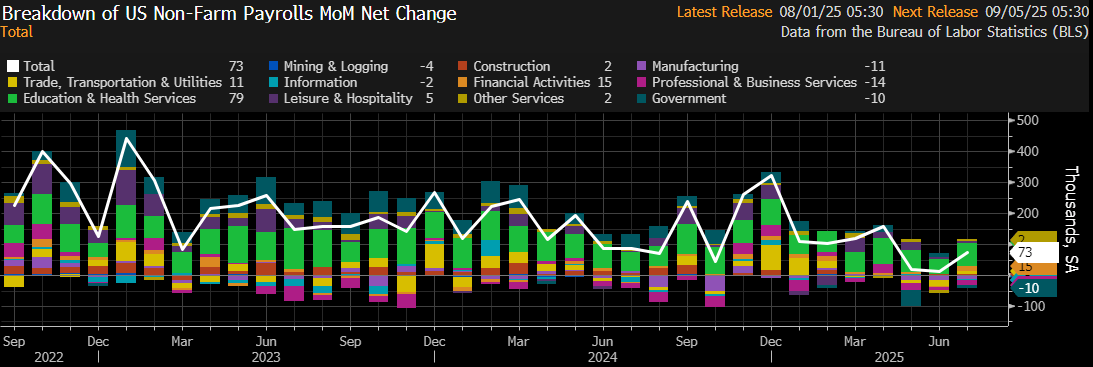
Nonfarm Payrolls are currently expected to print 85k vs. 73k prior, with private payrolls of 75k vs. 85k prior.
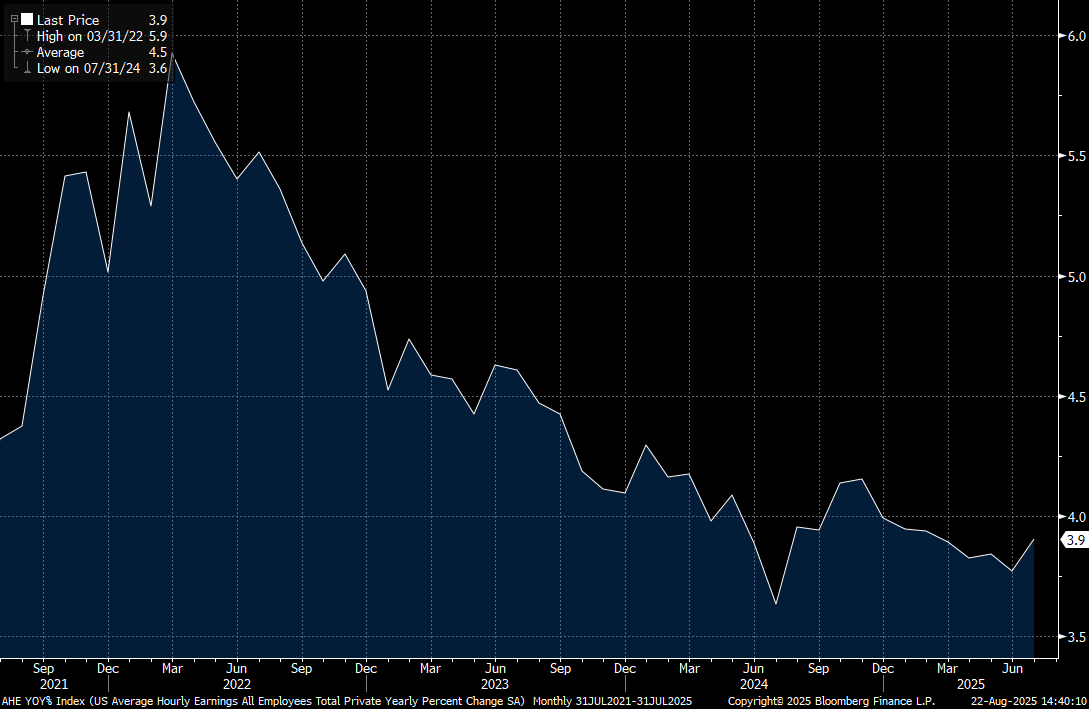
Average hourly earnings YoY%:
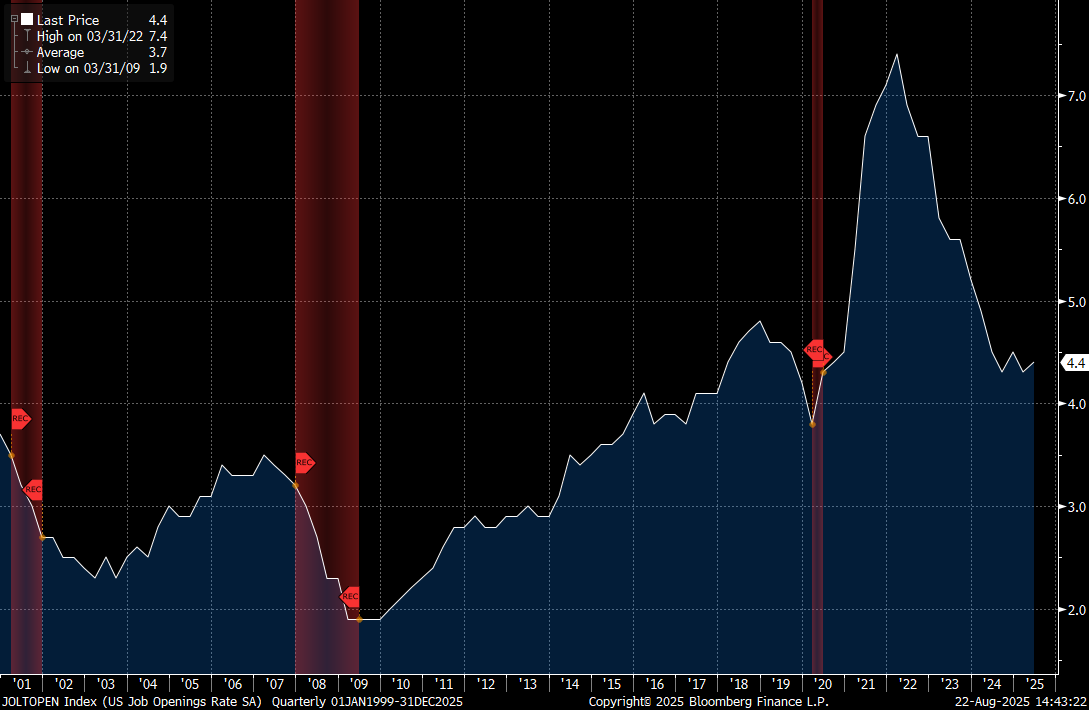
JOLTS Jobs Openings Rate:
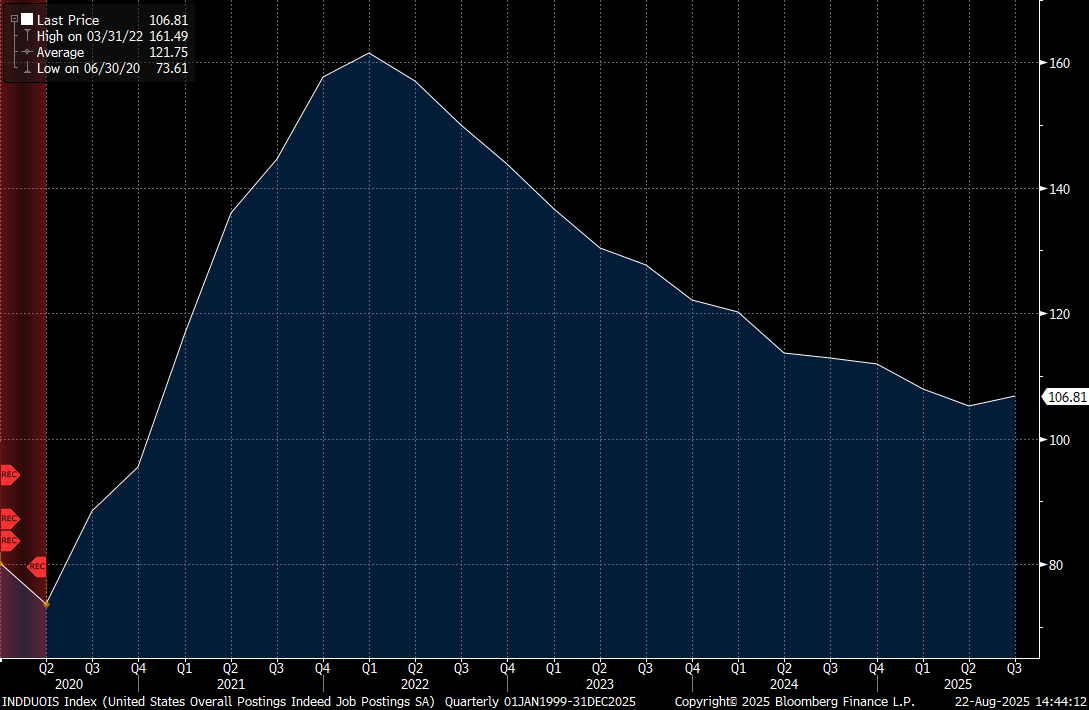
Indeed Job Postings:
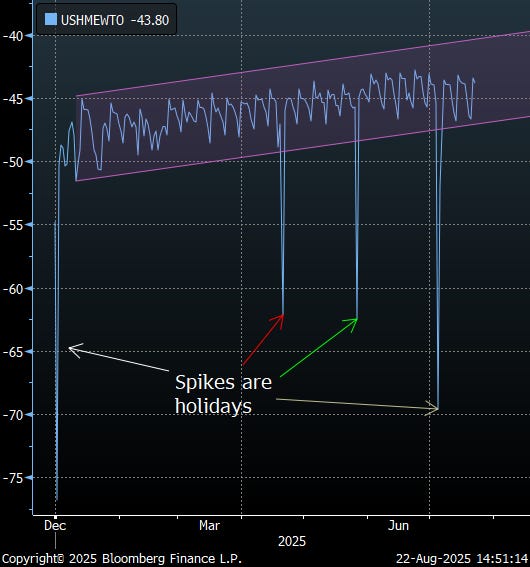
Homebase data:
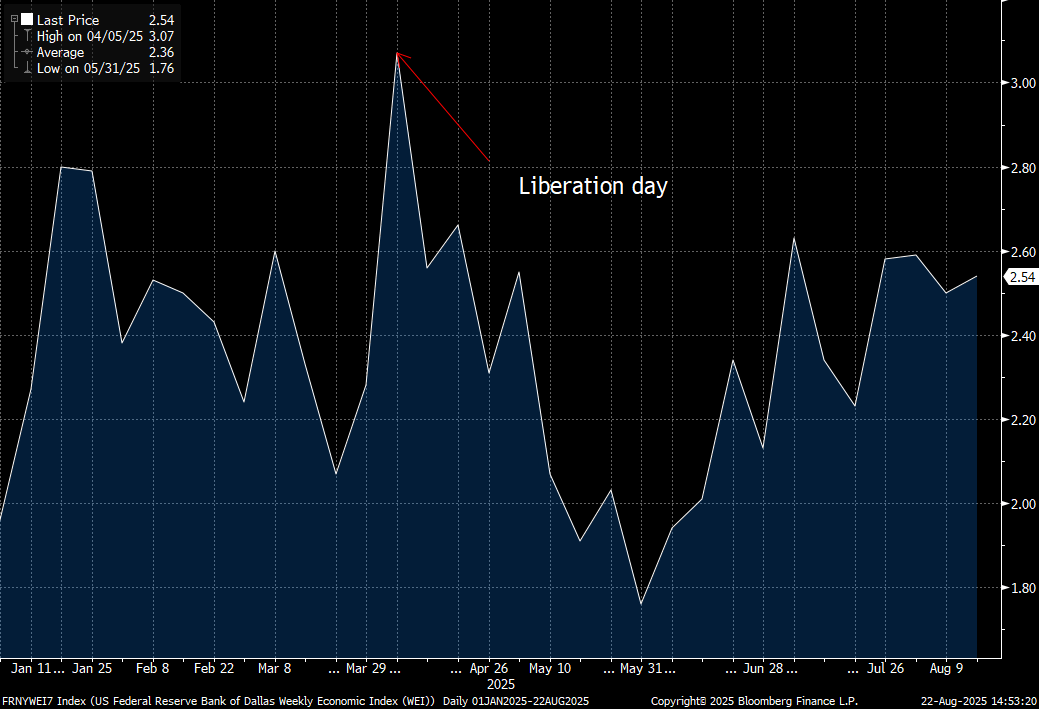
Dallas Fed's weekly economic index: